Oh What Fun: A Craft Fair Embroidery Review
First Impression: Festive, Friendly, and Familiar
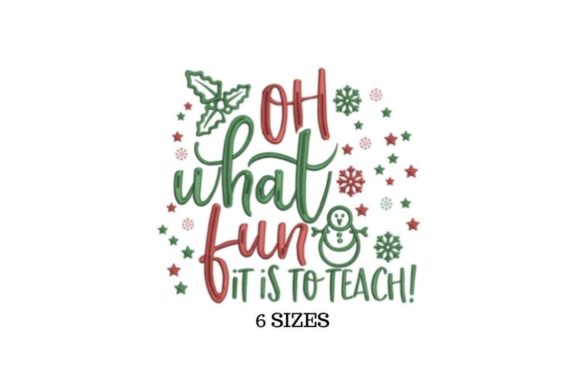
When I first read Oh What Fun, my mind immediately landed on warmth—not just Christmas cheer, but the kind that comes from shared tradition, gentle humor, and quiet nostalgia. It’s not flashy or maximalist. It’s not sarcastic or ironic. It reads as festive, cute, and quietly thoughtful—especially with that subtle teaching reference hinting at classroom charm or educator gifting. That makes it stand out in a sea of “Jingle All the Way” or “Naughty List” designs. At a craft fair, where shoppers scan dozens of booths in under three minutes, Oh What Fun lands as approachable, handmade, and emotionally resonant—not loud, but memorable.
Where It Shines: Product-by-Product Realities
In my booth setup—tote bags stacked upright, aprons draped over a ladder shelf, tea towels folded beside embroidered patches—I tested how Oh What Fun performs across real-world formats:
- Tote bag design: Works beautifully centered on the front panel. The phrase has rhythm and balance—no awkward line breaks—and reads cleanly even at 4.5" wide. Customers notice it mid-aisle because it feels personal, not mass-produced.
- Apron embroidery: Ideal above the pocket or along the waistband. Its modest scale avoids overwhelming the garment, and the cheerful tone fits kitchen, classroom, or studio settings—three top buyer personas for handmade aprons.
- Tea towel embroidery: A natural fit. The phrase complements linen or cotton flour-sack towels without competing with texture. Just be mindful: on heavily textured towels, stitch density must be moderate to avoid thread snagging or lost definition.
- Embroidered patch: Excellent candidate. Small enough for iron-on or sew-on use on backpacks, denim jackets, or kids’ lunchboxes. Holds clarity down to 2.75", especially with clean letter spacing and minimal decorative flourishes.
- Caps and curved surfaces: Proceed with caution. Unless the machine embroidery design is specifically digitized for caps (with reduced density and adjusted underlay), small lettering may distort on the crown. Test on scrap first.
- Fabric pouches & pillow covers: Strong visual anchor. Looks intentional and giftable—especially when paired with coordinating thread colors like cream-on-navy or red-on-khaki. Avoid overly dense fills that stiffen lightweight fabrics.
What Makes It Sell: Clarity, Charm, and Commercial Sense
Oh What Fun succeeds because it’s instantly legible, emotionally warm, and commercially flexible. It doesn’t require explanation—shoppers get it in under two seconds. That’s critical at a craft fair, where hesitation means moving on. It also photographs well for Etsy listings: no complex shading or tiny details to muddy in natural light. As a digital embroidery file, it’s likely low-to-moderate stitch density (based on its phrasing), making it fast to run, economical on thread, and easy to batch-produce across dozens of tote bags or tea towels.
It supports brand consistency too—if your small shop product line leans into cozy, nostalgic, or teacher-friendly themes, Oh What Fun reinforces that story without repeating motifs. And unlike trend-driven phrases, it avoids dating quickly. You can reuse it next year, and the year after, with fresh fabric pairings and thread colors.
Careful-Use Notes: Protect Your Production & Reputation
Even charming designs have pitfalls. Here’s what I double-checked before cutting fabric:
- Small lettering: If the “f” in “fun” or apostrophe is under 1/8”, it may vanish on dark fabric or thick stabilizer. Always test on your target fabric combo.
- Dense stitch areas: Watch for tight loops or overlapping letters—these trap lint, increase thread breakage, and cause puckering on lightweight cottons.
- Fabric texture: On terry cloth, burlap, or heavy linen, reduce stitch count or add cutaway stabilizer. Otherwise, text blurs.
- Dark fabric: Use high-contrast thread—avoid light gray on black or beige on navy unless you’ve confirmed readability in person.
- Hoop size & placement: Confirm the design fits comfortably within your standard hoop. Oversized versions risk misalignment on curved items like market bags.
Designer-to-Designer Checklist Before Booth Day
This isn’t just about stitching—it’s about showing up ready to sell confidently. Before adding Oh What Fun to your craft fair product lineup, I always:
- Run a test on scrap fabric matching my final product (e.g., unbleached canvas for totes, flour-sack cotton for towels).
- Check thread contrast in daylight—not just under booth lighting.
- Review letter spacing: Are words breathing? Does “Oh” visually connect to “What” without crowding?
- Confirm hoop size compatibility with my most-used items (especially aprons and pouches).
- Inspect stitch density—no more than 12,000 stitches for a 4" version unless the design is intentionally bold and graphic.
- Use the right stabilizer: tear-away for stable cottons, cutaway for knits or stretchy blends.
- Create at least one finished mockup—photographed flat and in-context (e.g., on a tote held by hand)—for social posts and Etsy listings.
- Compare fabric colors side-by-side: a cream thread on oatmeal linen reads differently than on ivory cotton poplin.
- Verify commercial licensing: if selling finished products, ensure the embroidery file permits commercial embroidery use. When in doubt, contact the designer or marketplace directly.
Final Thought: It’s Not Just a Phrase—It’s a Hook
Oh What Fun works because it invites participation. It’s not passive decoration—it’s a shared whisper of joy. For Etsy sellers, boutique makers, and craft fair vendors, that emotional resonance translates directly to dwell time, photo shares, and repeat customers. It fits seamlessly into holiday collections without shouting over other designs—and it gives handmade quality room to shine. In short: it’s a reliable, joyful, and quietly strategic addition to any embroidery business’s Christmas lineup.